
USU Cuts Ribbon on Thomas and Patricia Willis Veterinary Medical Education Building
Published
9/5/2026
Utah State University and the College of Veterinary Medicine celebrated the grand opening Friday of the Thomas and Patricia Willis Veterinary Medical Education building.
“If you are involved in animal agriculture in any way, today is your day,” said John Ferry, one of a cast of speakers at the event and a key figure in the creation of the veterinary college as a former USU Board of Trustees vice chair.
The festivities included a ribbon cutting and the debut of a limited-edition Aggie Ice Cream flavor: Neigh-apolitan. The event marked the culmination of years of planning and preparation in service of expanding the field of veterinary care throughout all corners of Utah and the Intermountain West.
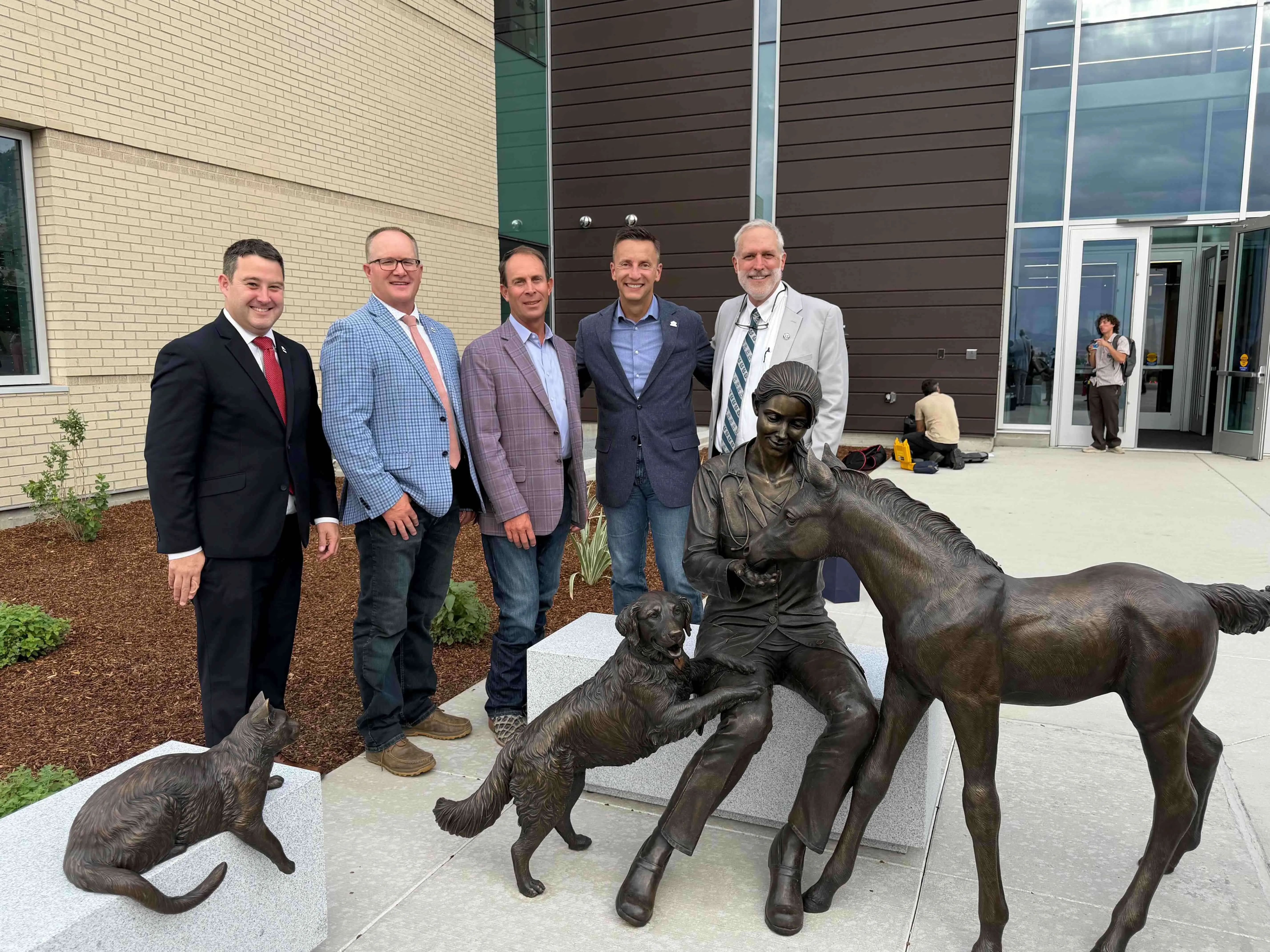 Utah Farm Bureau leadership visits with USU President Brad Mortensen (2nd from right) and Dirk Vanderwall (right), the dean of the veterinary college.
Manning the pair of giant scissors, Thomas and Patricia Willis, donors for whom the building is named, cut the ribbon. It fell away on the first snip.
The Willises donated $5 million toward the facility and an endowment to support the college on the path ahead. The pair have deep roots in agricultural life and aim to see veterinary medical education thrive at Utah State.
“We saw this as an opportunity to invest in future generations,” Tom said.
The three-story, 113,000 square-foot building took two years and three months to complete. It was designed by Salt Lake City-based VCBO Architects and built by Jacobsen Construction. Thirty of the 41 subcontractors involved in the project are headquartered in Utah.
Guests at the ceremony toured the building, which features a tiered lecture hall, research labs, wet labs, cold rooms, veterinary exam rooms, classrooms, sub-zero freezers, faculty and staff offices, student gathering spaces and outdoor animal enrichment areas. Hidden from view, a complex labyrinth of sophisticated mechanical, electrical and water systems support the capabilities typical of a state-of-the-art animal hospital.
Dirk Vanderwall, the dean of the veterinary college, said facilities like this didn’t exist when he was in vet school.
The design, he said, was intentional and tailored with veterinary students top of mind.
“For example, the new building includes a suite of 10 mock exam rooms, each with an adjacent observation area, so that students can interact with an actor playing a client as part of clinical communication training,” Vanderwall said.
USU President Brad Mortensen expressed thanks to the collaborators statewide who came together to make the plans a reality.
“We are especially grateful to the Utah Legislature and key partners for their commitment to our land-grant mission and for recognizing and investing in our vision to establish Utah’s only veterinary school in a state facing a critical shortage of veterinarians,” he said.
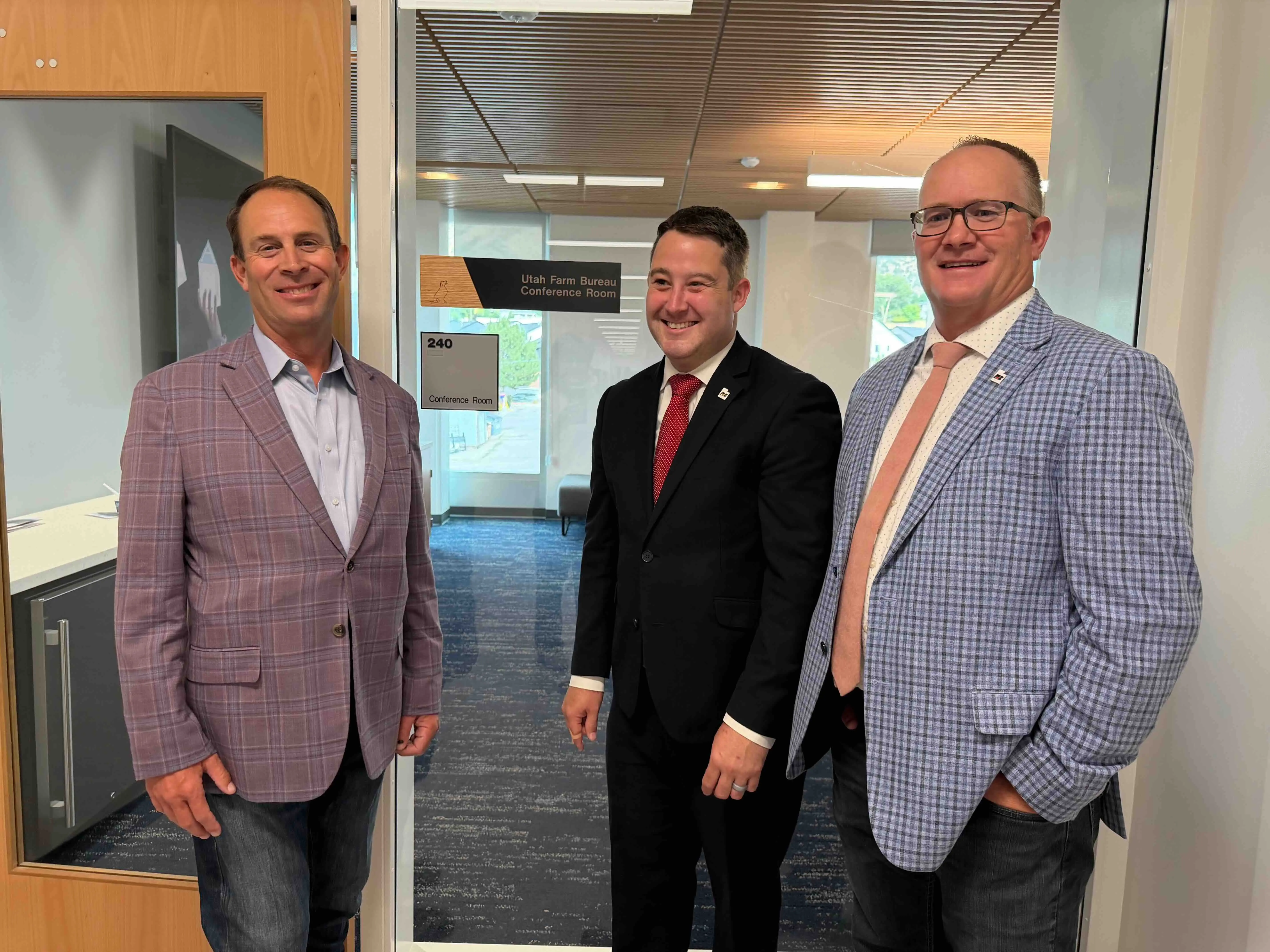 Farm Bureau staff by the UFBF Conference room in the new Veterinary School. From left to right: Wade Garrett (VP of Advocacy), Terry Camp (VP of Public Policy), and Spencer Gibbons (Chief Executive Officer).
A week prior to the ribbon-cutting, the college welcomed 77 new students as the Class of 2030 donned white coats symbolizing their transition into the veterinary profession and the responsibilities therein. In four years, when they graduate as day-one-ready doctors of veterinary medicine, they will be armed with the clinical skills, practical knowledge, communication tools, and personal resilience necessary to contribute to the communities they serve.
Other speakers at the ribbon-cutting ceremony included Kelby Anderson, the veterinary college’s president of the Class of 2029; Utah State Rep. Casey Snider, Utah State Sen. Chris Wilson, former state senator Scott Sandall, Geoffrey Landward of the Utah Commission of Higher Education, and Michael Bowen of USU’s Advancement office.
Another addition to the veterinary medical building made its public debut Friday: A bronze sculpture featuring a seated veterinarian with a foal at her side, a dog at her feet and a cat looking on from a neighboring bench. Titled “A Long Tale,” it takes its name and inspiration from James Herriot’s 1972 book All Creatures Great and Small, which describes the life of a veterinarian as “a long tale of little triumphs and disasters.”
“A Long Tale” was commissioned by a committee of USU representatives, architects, state project managers, and local visual arts specialists, through the Percent-For-Art Act, which uses 1 percent of legislative appropriations for capital development projects to commission, install, and maintain public art across the state of Utah.
Want more news on this topic? Farm Bureau members may subscribe for a free email news service, featuring the farm and rural topics that interest them most!