
Nature Has It Right
Author
Published
10/6/2026
It is easy to take salt for granted today. A canister costs only a few dollars and sits quietly on nearly every kitchen counter. But for much of human history, salt was among the world’s most valuable commodities. It preserved food long before refrigeration, sustained both people and livestock, and fueled trade across continents. Kyle Bosshardt enjoys reminding visitors to the Redmond Salt Mine just how valuable it once was.
“Did you know that salt used to trade ounce-for-ounce with gold?” Bosshardt asked. “At one point in history, it was so valuable because it’s needed for life. Gold’s just pretty to look at. You must have salt to live, so do animals.” That importance is even reflected in our language. "The word Salary is derived from Sal, which means salt,” Bosshardt explained. “Salt was so valuable, it was used as currency.”
The Redmond salt mine, home of the company’s well-known Real Salt products, has quietly supplied mineral salt for livestock, agriculture, highway safety and kitchens around the world for nearly 70 years. But while the mine is one of Utah’s most remarkable natural resources, there is no mine without the Bosshardt family.
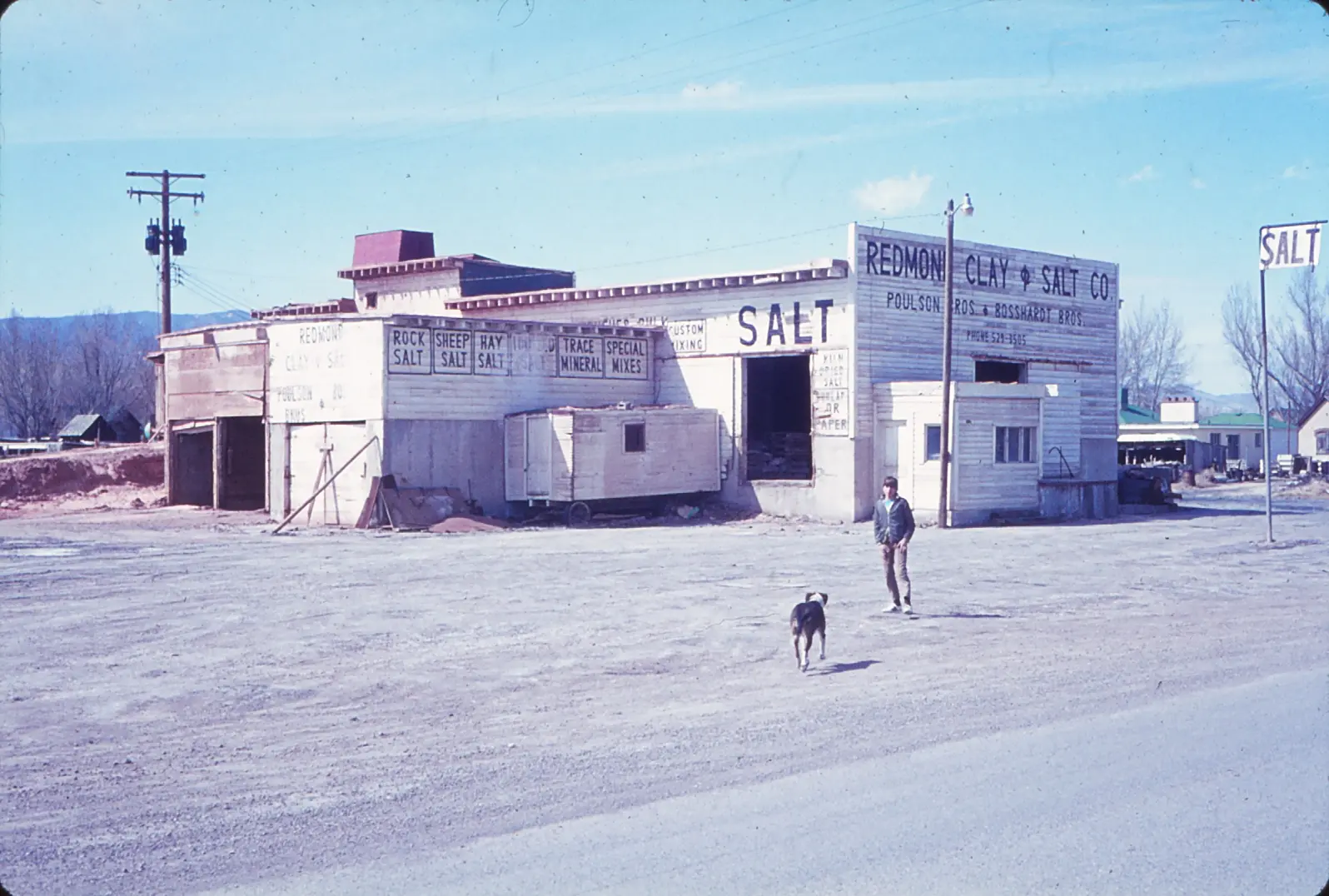
Visitors experience that history firsthand through Bosshardt, whose mine tours blend family history, geology, and mining into a story spanning millions of years. According to stories passed down in the family, Native Americans noticed deer repeatedly eating mineral-rich soil near present-day Redmond, recognizing that something valuable lay beneath the surface. Members of the Bosshardt family later witnessed something remarkably similar as their own livestock sought out exposed salt near the surface.
The discovery came at an important time. During the drought of the 1950s, the Bosshardts were searching for ways to diversify their ranching operation while continuing to steward the land that had supported their family for generations.
Rather than abandoning agriculture, they looked more closely at the resources already beneath their feet. In 1958, they founded Redmond Minerals. What began by supplying natural mineral salt to neighboring ranchers eventually grew into a business serving customers around the world.
An Ancient Sea Preserved
Millions of years before the Bosshardt family founded Redmond Minerals, the Sundance Sea covered much of what is now central Utah. As the inland sea evaporated, it left behind thick deposits of mineral-rich salt. Across most of North America, many similar salt deposits remain buried thousands of feet underground. Redmond is different.
Geological uplift pushed this portion of the ancient seabed close to the earth’s surface, making it one of the few places where miners can physically enter a salt deposit rather than dissolve it underground.
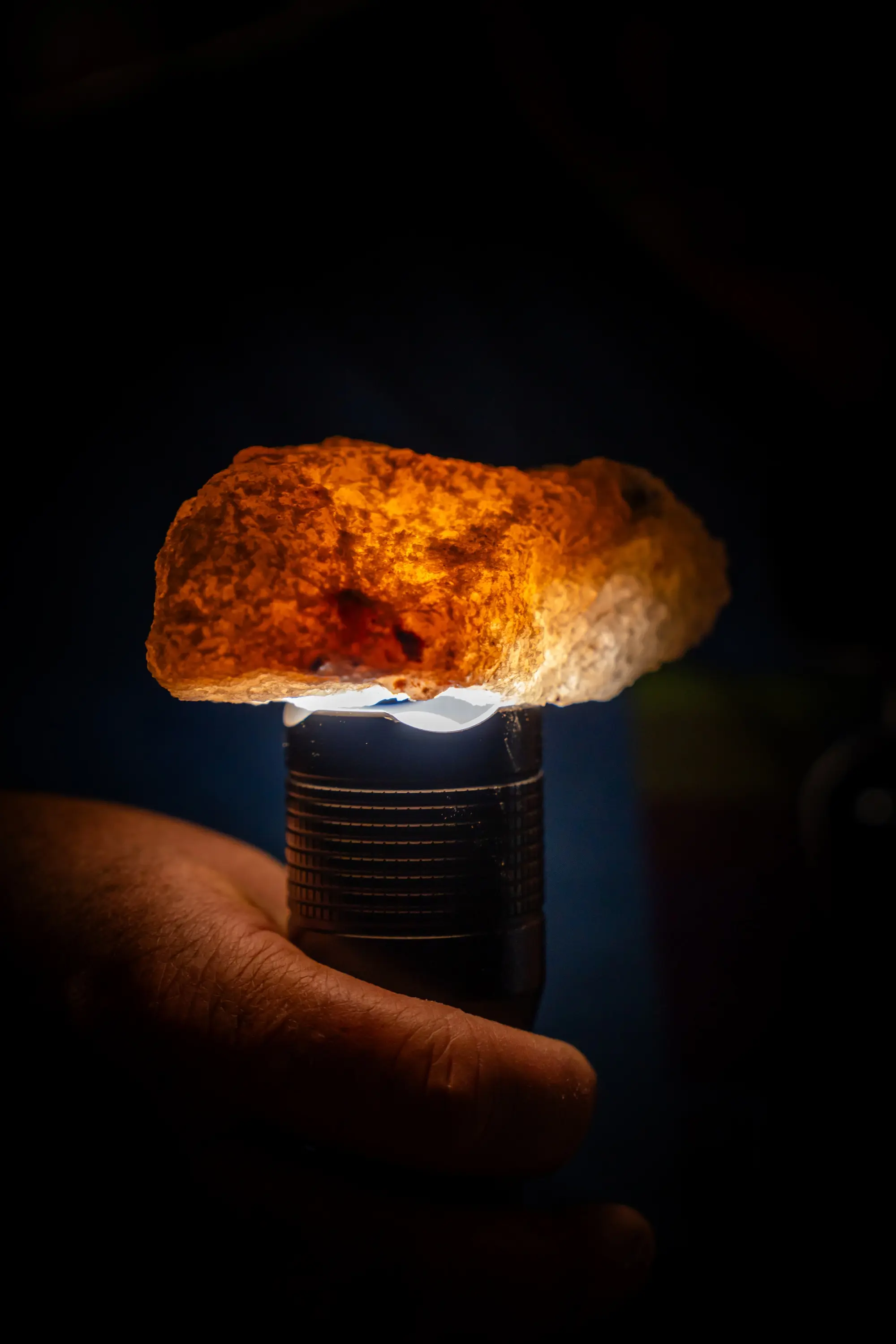
“We're very fortunate in the fact that sometime over the last several million years, that dried-up sea salt deposit at 5,000 feet down has been squeezed and extruded to the surface, and that only happened in this part of our valley right here,” explained Bosshardt.
Just as important as what pushed the salt upward was what protected it. A layer of bentonite clay surrounded the deposit, diverting groundwater away from the salt and preserving it for millions of years.
“It’s basically been sitting there waiting for us to access it,” Bosshardt added.
Mining What Nature Created
Stepping underground quickly changes your perception of mining. The walls shimmer with shades of white, pink, and deep red, while massive tunnels stretch farther than headlights can reach. Instead of damp stone, nearly everything around you, from the towering walls to the road beneath your boots, is carved from an ancient seabed.
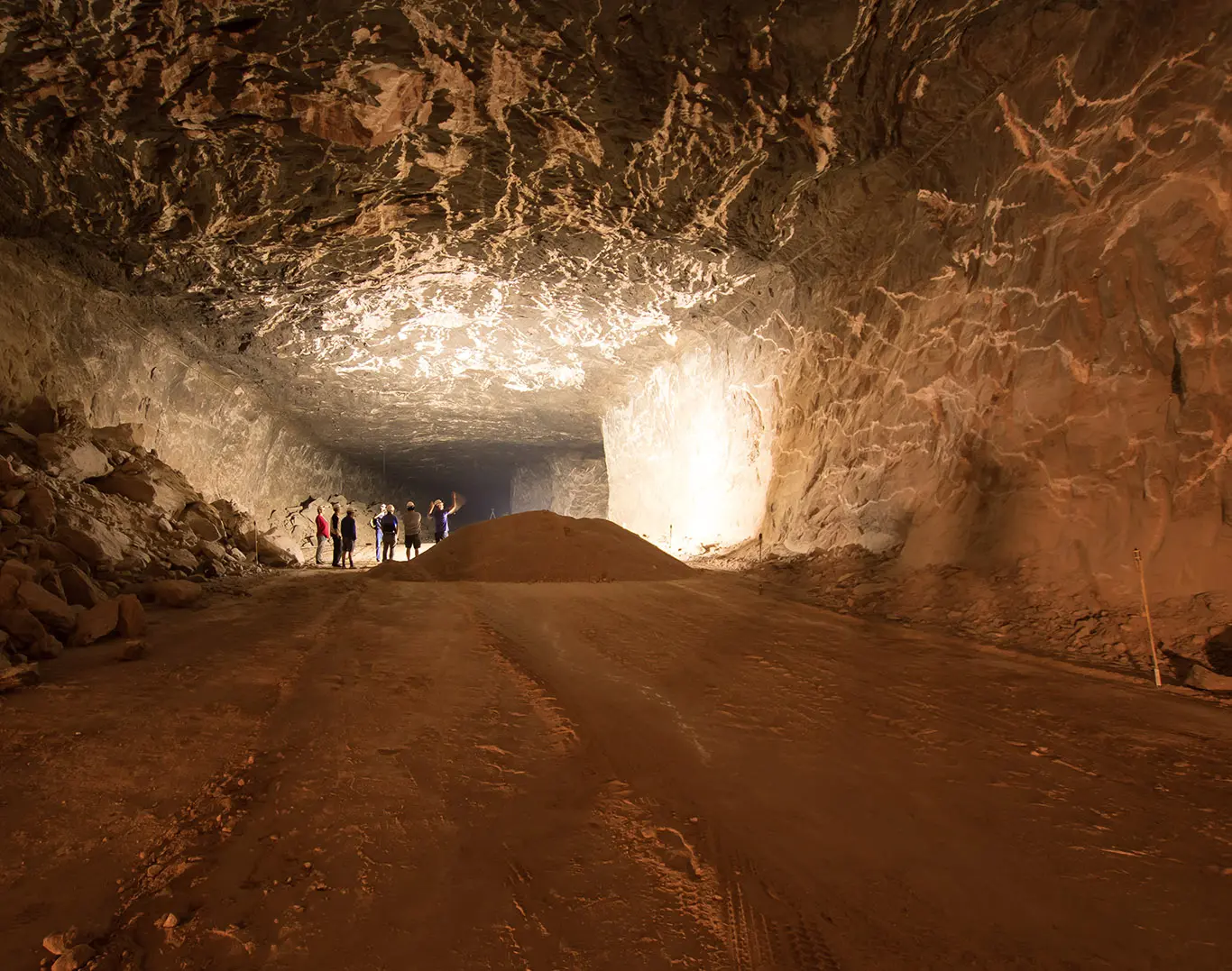
Massive mining equipment navigates tunnels roughly 40 feet high, with enormous pillars of salt approximately 80 feet thick left between passageways to support the mine. The network extends for miles beneath the surface and across multiple underground levels. Unlike many underground operations, the mine relies largely on the salt's structural strength. In the Redmond mine, you will not find supporting timber or pillars.
“Most mining happens in ground that the sediment has settled out horizontally,” Bosshardt said. “You’re much more susceptible to collapse with weight and pressure than you are in strata that stands on its end like this. We don’t have timber or pillars because these veins stand vertical. It’s very strong and rigid, like the bearing walls in your house.”
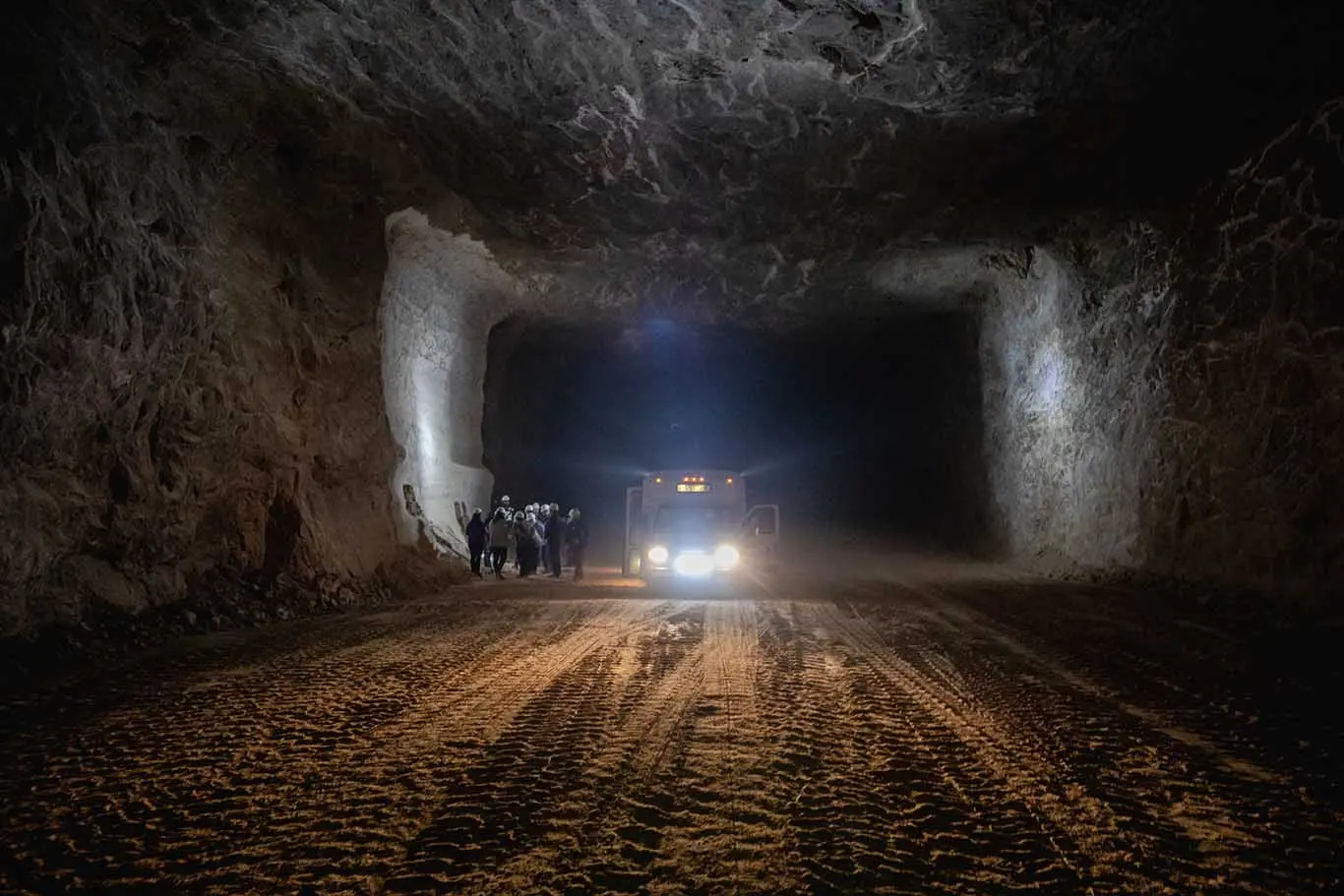
Each blast begins with crews drilling roughly 80 holes into the salt face before loading them with approximately 2,000 pounds of explosives. Two carefully planned blasts each day advance the mine roughly 32 feet while producing nearly 2,000 tons of salt per blast. In total, about 750,000 tons of salt leave the mine each year. Yet perhaps the most remarkable part isn’t how much salt is produced. It’s how little they change it.
The company originally mined natural mineral salt for livestock producers throughout the West, providing cattle, sheep, and other livestock with a valuable mineral supplement. As the business grew, the family continued to look for additional ways to use the resources nature had provided.
Road crews found that Redmond’s salt performed exceptionally well as a de-icing agent, opening an entirely new market while allowing the company to continue serving the agriculture sector. Today, agriculture remains an important part of Redmond’s business, even as its products have expanded into homes around the world.
Although the table salt Real Salt has become Redmond’s most recognizable product, it accounts for less than 1% of the mine’s annual production. Ironically, that small percentage has become the company’s greatest value.
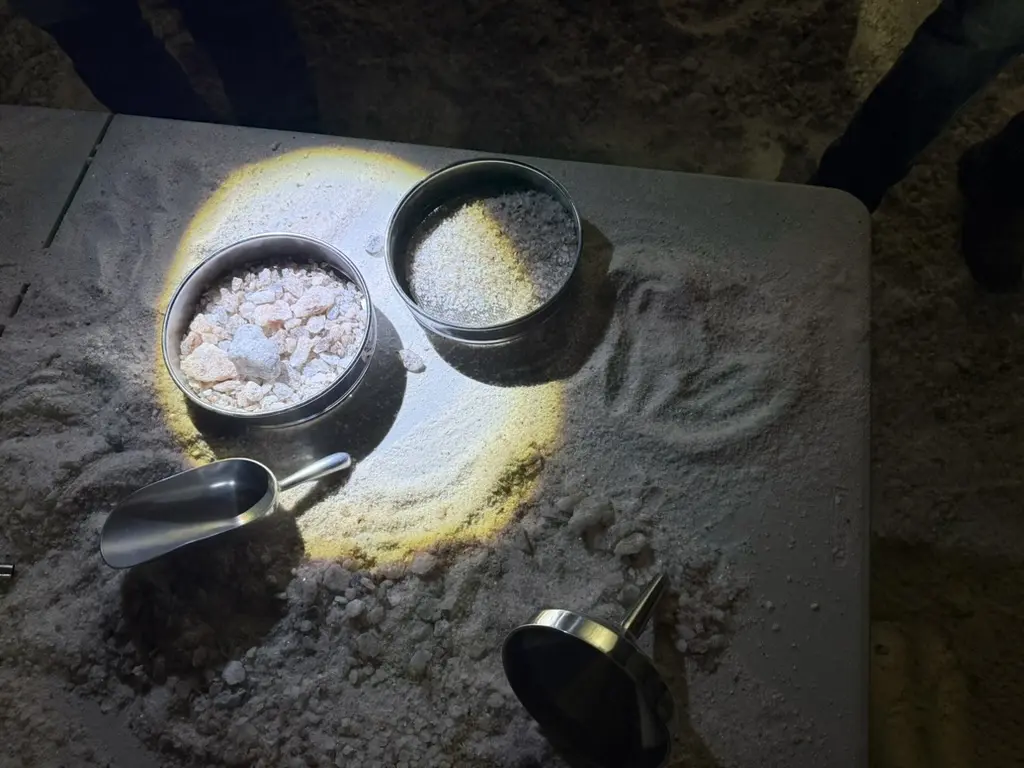
“If we’re going to put it on your table, we want to guarantee there can never be any blast contaminants,” Bosshardt said. “So, we mine it differently.”
Rather than stripping away those naturally occurring minerals, Redmond leaves them intact.
“The colors you see in it are because it is sea salt,” Bosshardt said. “We want those minerals in there. They’re valuable. They’re good for our health, and we want to leave them in there.”
Those minerals give Real Salt its distinctive pink, red, and off-white appearance. As Bosshardt points out, every salt deposit tells its own story.
“Salt deposits, depending on where they are geographically on the globe, no two will ever test identically the same,” Bosshardt said. “They’re like our DNA or our fingerprints.”
Other than crushing, screening, sizing, and removing any metal particles introduced during processing with powerful magnets, the salt reaches consumers much as nature created it.
Sharing the Story
Perhaps the most memorable part of visiting the Redmond salt mine isn’t the geology. It’s Bosshardt. His enthusiasm for the mine is contagious. One of his favorite stories involves rock legend Ozzy Osbourne, who toured the mine while filming for his reality television series Ozzy & Jack’s World Detour
“He got so excited after tasting the salt that he disappeared into his RV,” Bosshardt recalled with a laugh. “We waited for Ozzy Osbourne to make popcorn and eat it with Real Salt before resuming filming.”
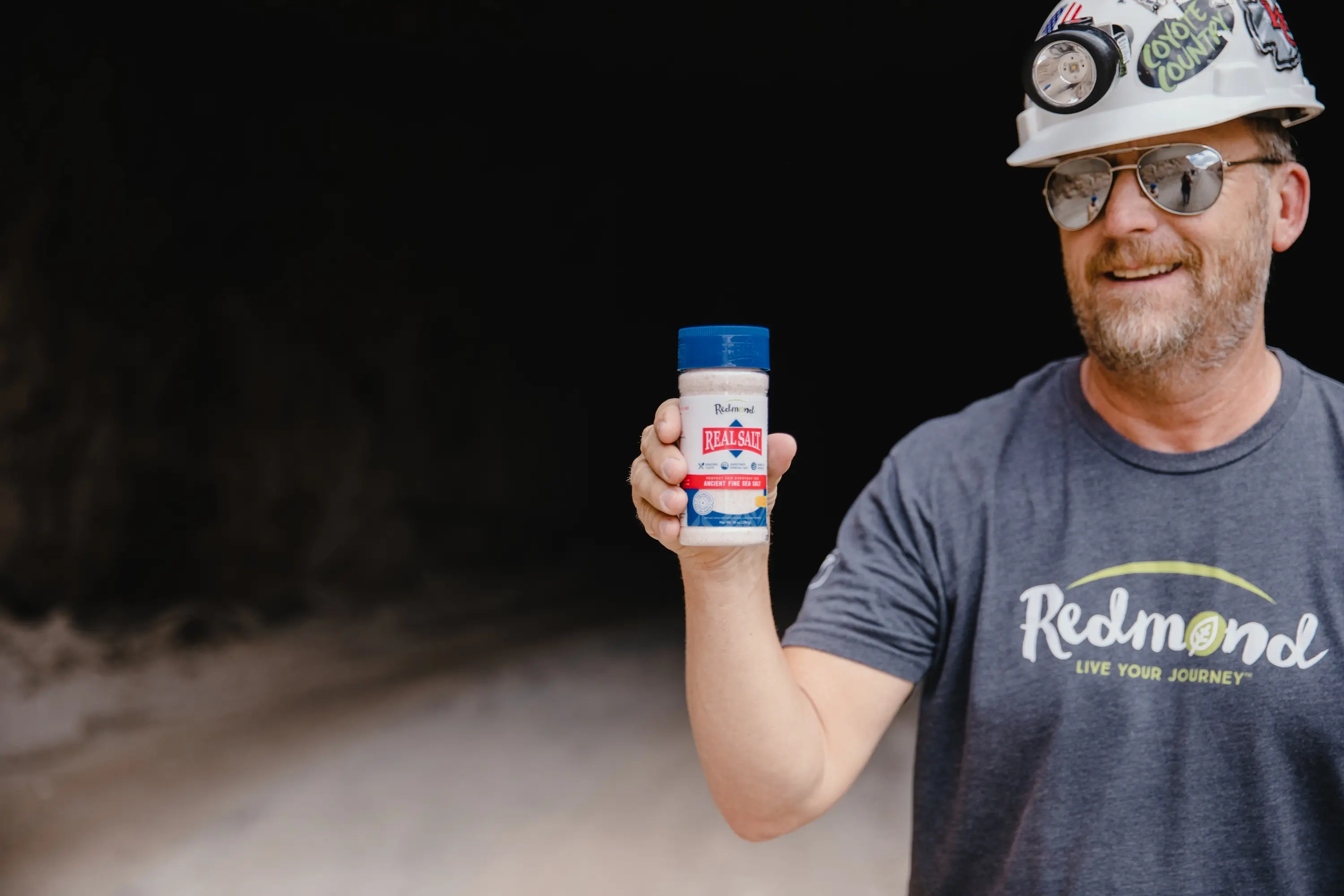
Between explaining ancient geology and modern mining techniques, he encourages visitors to take home a small chunk of salt to grate over a steak. Visitors usually laugh, and many leave with their own chunk tucked into a pocket. It isn’t simply a souvenir. It’s a reminder that one of Utah’s most extraordinary natural resources has been quietly waiting beneath central Utah for millions of years.
To learn more about Redmond Mine or book a tour, visit: https://lp.redmondminerals.com/tour.
Want more news on this topic? Farm Bureau members may subscribe for a free email news service, featuring the farm and rural topics that interest them most!